
existence in fragments
i turned twenty-one; i'm still not a poet

I have been twenty-one years old for about eight weeks now. This newsletter is overdue for that same amount of time, since I intended to post this for my birthday last January. Writing often serves me the harsh truth that sometimes wanting something is not enough to will it into existence—the delay of this newsletter being a glaring example of that. Please let me apologize for the long silence that I have unintentionally brought to my Substack page. There are no real consequences for the lack of content I put out, but what can I say; I’m a creature of habit. But it has been a while, hasn’t it? I’ve missed this space dearly.
Not much has been going on from my end. In January, I started reading the first two books in the Green Bone Saga by Fonda Lee, enjoyed my extended semestral break, and celebrated my birthday. For some reason, January is always the longest month; the Monday out of all the months in the year, as some people describe it. January is yearning prolonged: for a fresh start, seeing results in the things we decided to change or pursue, and rushing towards inklings of thought in hopes that it could result in something fruitful by the end of the year. February was a weird transition in time, and I must admit I do not remember much of it. I did buy more books whose spines I have yet to crack, started the third book in the Green Bone Saga, and reflected on my perception of romance (and the lack of it in my life), as one does when Valentine’s Day came around. (I would elaborate on this, but I wasn’t able to jot down any of the thoughts I had and just went on a heated monologue while pacing around the bedroom. Whatever that was is between me and the four walls of that space, for now.) February, at least for me, was defined by my desire to start changing aspects of my life and my own self because I was trying to somehow justify my being twenty-one. I don’t have to prove anything, really, but at times I felt that something about me should change to distinguish the me of this year from the me of last year and the year before; the two versions of myself lost to the ethers of the lockdown period. And change did occur, I guess? I pose this as a question because the only obvious change I did is finally cutting off the curtain of blonde hair I still had and keeping the length of my outgrown roots, which reached my chin. I also got drunk enough to have the confidence to apply for two internships before getting indirectly rejected from both of them. The experience made me indifferent towards the workforce again, and it quelled any desire I had left to further embellish my resume before graduating. I then took up crocheting to cope with my lack of marketable skills for employment. I am not so sure about other changes that might have passed me during February.
March has been its own blur so far, with me often waking up on most mornings thinking about how someone might have smudged the contents of my brain because I keep remembering I’m twenty-one, but I can’t help but feel that I’m still stuck in my nineteen-year-old self. It’s getting redundant to talk about who we were pre-pandemic in comparison to who we are at present, since these are things we have no control over given everything that has happened in those two years, but I can’t help it at times. Especially now that things are going back to a supposed “normal”, some people just expect you to pick up where your life came to a halt in 2020 and make yourself fit into that old mold.
Since my birthday, I have been evaluating what kind of shape being twenty-one will put me into. I have never been a poet (even when I tried so hard to be when I first started looking for my writing voice), so I’m not referring to shape as one would think of metaphors or anything related to figures of speech. I am a visual learner to a fault, so abstract things taking shape is how I make sense of most things. Thoughts take the silhouettes of letters and characters of the written word, love manifests through reassuring actions and warm meals, happiness becomes the experience of being able to see a smile take shape on the face of the people you adore the most. In the case of turning twenty-one, I have been trying to catch any glimpse that points towards any changes in this body that has carried me for two decades and a year. There hasn’t been much, at least from my own observations. I still have the same broad shoulders, and I still stand at the same height of 165cm that I’ve been since high school. My eyelids are still uneven on most days, and my cheeks are still rounded and full. I don’t look particularly young anymore, but I don’t appear older either. My physical self emphasizes the role of still being the adverb that strengthens the notion of how I continue to look pretty much the same, despite the expectation that some part of me must have warped somehow, somewhere down the line.
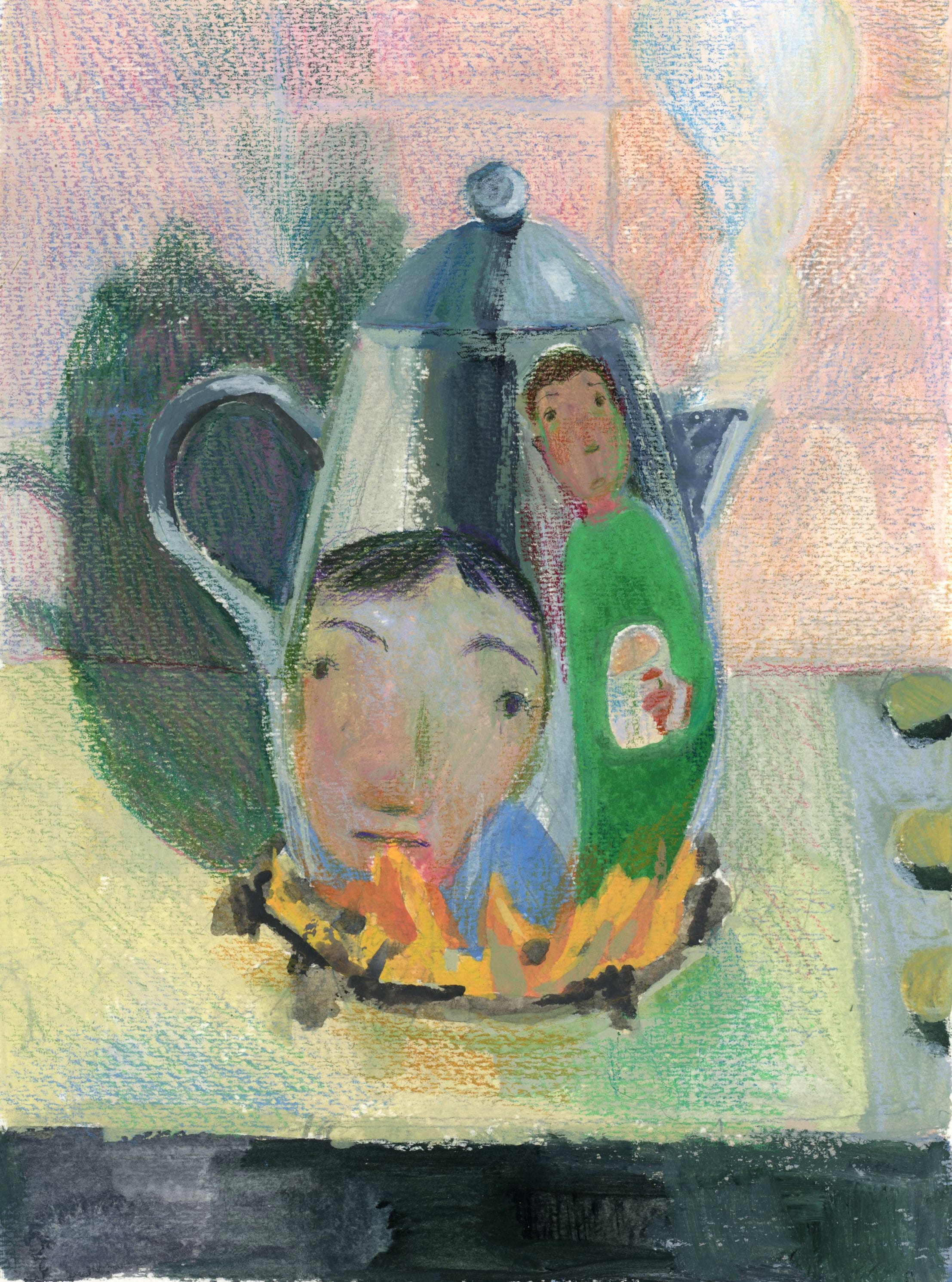
When I first intended to publish this piece, I wanted to talk about the weeks leading up to my birthday and the discomfort of celebrating it because I hate being the center of attention, etc. All that jazz. But I don’t remember much of that time now, so I have nothing to discuss regarding the matter. I do, however, have a list that I made of things that I want to put into practice or learn to form into a habit to try and initiate some change in my life that I could distinguish myself from. I initially wanted to write down twenty-one things, because you know, I turned twenty-one. Trying to stay within the boundaries of a theme, I suppose. But that overwhelmed me a lot because I couldn’t even list down fifteen things, and I decided to stick with ten. Ten is a good number, because I say so and it’s an even number ending in zero which makes it satisfyingly concise. But anyway, here is my list and my long-winded explanation about each one. Without much ado:
1. Make more lists
While I do make a to-do list every day based on my time blocked schedule, carry a list for each trip to the supermarket, and make numerous outlines before starting any writing project, I never fell into the habit of simply making lists to take note of my thoughts. Ever since I was younger, I had a tendency to over-explain and make paragraph upon paragraph of my thoughts because I refused to literally voice it out or I chose not to make a statement at all if I could not simmer in the thought long enough to make an essay out of it. It was all or nothing; I didn’t like expressing myself in fragments. Ironic, really, when most of the drafts I submitted for workshop class were all symptomatic of splintered thoughts scattered into different directions with not enough elaboration. I want to learn how to rely on lists because sometimes thoughts are just that: fragments. They can either grow into something more eventually or they stay in that short, abrupt form until you forget about it. And that’s okay. Not everything needs to be heavily explained all the time. Not everything needs to belong to a bigger picture. Not everything is a novel thought that can be expounded on. I also feel the need to point out the irony of me talking about letting my thoughts exist in fragments on a list, when I am literally explaining the ten items I listed down. Old habits die hard.
2. Use social media less
In this day and age where being “chronically online" is becoming a condition of sorts, one borne out of an excess time spent on social media (and the internet, generally) that skews a person’s entire perception of the world, being away from online spaces is a suggestion a lot of people should take into consideration. While I did spend much of my adolescence on the internet, I wouldn’t consider my current self as someone who is chronically online. The ScreenTime feature on my phone tells me I average about five hours of use daily, and I’m trying to get to a point where I only spend around three hours maybe? That does not make me any better than anyone, by the way. (In case someone chronically online does read this newsletter and decides not to apply critical thinking onto what I’m saying here.) But I finally quit Instagram by the tail-end of January this year, after taking long breaks from using the app from time to time before returning and imposing all of my thoughts and real-time inconveniences to my finsta close friends audience of thirty-seven people. I grew up using social media apps, but I never “thrived” in any of these spaces as I am a reserved person by default and only become comfortable enough once I find a circle of people to share my thoughts with. I am, as the TikTok girlies would say, that kind of guy with no profile picture, less than a three hundred follower count, and not enough posts to garner attention from strangers. Still, I valued Instagram a lot because it was a way for me to passively stay connected with my friends from high school, the internet friends who became privy to my real life, and other people I liked well enough to bring into my space. So when I decided to leave it for good (with no warning whatsoever, because I don’t like announcing these kinds of things, it’s very mortifying for some reason), I inadvertently severed my ties with people because I don’t get to see their Instagram stories anymore and lost access to what goes on in their day-to-day lives, and vice versa. I don’t miss Instagram, but I do miss my connection with some of the people I left behind. I’m not returning to that space, but I am determined to rekindle relationships with my friends by messaging them directly and having conversations with them. It sounds kind of outmoded to do as such, when the point of social media is to make the creation of bridges much easier than how it was when people still kept phone and address books, or the time where sending letters was the norm. My grandmother still keeps her personal phone book containing the landline numbers of some of her cousins who are still alive, along with some other distant relatives I don’t particularly care about. Seeing her stick to something so analog made me want to take the effort to try and be the one to initiate conversation with people. I want to stop relying on some features of social media that make me docile in how I choose to interact with the important people in my life. I want to use social media less, and turn to proper conversations to maintain my relationships. Maybe it would work on some people and strengthen our bond, or maybe it won’t work at all, but it’s worth a try anyway.
3. Stop being ashamed of loneliness
In line with the previous item on this list, I need to acknowledge that I have been experiencing more bouts of loneliness ever since I quit Instagram and lessened my use of social media. A lot of my social interactions in the past two years relied heavily on social media because of distancing protocols and other health hazards, so it’s not that much of a surprise to feel like some part of me got amputated, still waiting to fully heal. But I guess I also struggle with admitting loneliness because when I went through something similar as a child, I was not allowed to express much of what I was feeling. I was taught that being emotional would not solve anything and feelings only existed to inconvenience me further, and so I learned how to quietly endure and avoid bringing the burden of my emotions as a weight for others to carry. I’m still trying to unlearn this unhealthy inclination towards wanting to suffer in silence, along with attempting to lower my stubborn pride little by little until I can comfortably talk about what I feel instead of internalizing everything long enough for it to curdle into something angrier, more cruel, and out of my control. Loneliness isn’t an inherent part of the human condition, I think, but it does introduce itself to a lot of us even when we know we are loved and are surrounded by people who make for decent company. Experiencing emotion isn’t a sort of failing by any means either, and I want to instill the idea that it does not make me any less of a person to acknowledge that I do get affected by things, and that I experience wanting: of being in touch with other people, of being around other people, of being reassured that I am loved by those I love.
4. Take more walks
I’m no physician or within the proximity of knowledge to know about the exact health benefits of walking, but taking walks helps clear my head and hold my tongue when I become too irritated at someone that lashing out seems like the best course of action. My favorite walks have always been done in the morning, leaving the house right before the sun comes up and I go to the part of the neighborhood where I can catch sight of the sunrise and step into its comfortable warmth before it turns blistering. Again, I’m no poet so I can’t wax poetic about the delights of walking, but it’s there and it’s wonderful. And I intend to have more of that serving of joy as time goes by.
5. Stop falling for the sunk cost fallacy
Oh, this one’s quite difficult. Even before I learned what the sunk cost fallacy is, I was already a victim to it on numerous occasions growing up. I remember my mother ignored me for a few days when I decided to quit swimming, then Taekwondo, then golf, then Kumon, then music lessons, and other extracurricular activities that I had already invested time and effort in (along with my parents’ money). My mother wanted me to reap the fruits of my pursuits, but I’m not all that competitive and I was only allowed to quit because I reached different points of frustration and demotivation that even my parents got tired of putting up with me. After all, after I decide on something, I rarely go against it. Now, when I decide on quitting, I fear the kind of disappointment I might be met with because people think it’s best for me or it’s a traditional marker of success so I should continue doing it since other people think it’s good. Sometimes, I still think of my mother temporarily shutting me out for abandoning things that didn’t make me happy in the slightest, and it becomes enough of an incentive to keep going to the point that this compliance eventually morphed into stubborn pride: I started something, so I must always see to the end of it because it’s going to make me look weak and without diligence. It’s a bit funny to think that the sunk cost fallacy exists. Isn’t it part of instinct to turn away from things we don’t like or things that hurt us? So what if we invested time and energy and money on it, right? But the process of unlearning can be quite difficult, that dealing with an unwanted presence of something in our lives is easier because we just have to keep doing what we were already accustomed to. I currently have something I have thought of dropping numerous times already, which is my Minor in Public Management. Studying concepts on policy making and governance can be interesting enough in its own way, but I dislike the theoretical nature of it and how it tries to solve systematic problems without actually taking action. But I won’t quit, because I only need to complete six more units of it and some of the personnel from the Political Science department of my university are already well-acquainted with me and are always kind enough to accommodate my concerns regarding my extra classes. I also don’t know how to unlearn the familiar weight of taking extra units per semester, so I’m going to see this minor to the end. However, that degree will be the last major, life-altering experience that I allow myself to drown in. I want to learn how to quit while I’m ahead, and to keep healthy boundaries to avoid exhausting myself for things I don’t particularly enjoy.
6. Learn how to accept change
By now I think anyone who’s reading this is starting to see how most of the problems in my life are almost always linked to my fixed, stubborn nature. This one is no different. Some changes are inevitable: the passage of time, transition of the seasons, birth, death, the way someone grows into their features, that kind of thing. A lot of the changes we experience in life are results of choices though, be it something made with intent or not. I struggle with this because sometimes the choices made by the people who matter to me are not aligned with what I want and it creates a rift. Not necessarily out of bad faith or mistrust or anything sinister. Sometimes I just find it difficult to adjust to new things, even if it’s for the better.
7. Practice (healthy) communication more
Relative to the previous item, I often deal with change by shutting myself out and processing things on my own terms, which is a choice in itself and a response on its own. When I get upset, detachment is what I count on because the idea of having diplomatic, careful conversation is daunting to me as it was not something that was practiced with me when I was growing up. Silence is an answer too, albeit not the best one most of the time. I guess I also fear the kind of response I might get when I attempt to practice communication, as predicting reactions is something I had to learn from a young age to protect myself. I want to stop fearing the idea of making others upset for stepping on my boundaries, and I certainly want to work on becoming more tactful and honest in trying to maintain the bounds of my comfort. It won’t be easy, as right now I’m struggling to reply to messages and to tell my friends and people I work with that I’m having a bit of a rough patch, but baby steps, I suppose.
8. Be more accepting of love (not even romantic)
Growing up, I was never seen as conventionally attractive or obedient enough to ever be considered lovable. When you are born a girl, in a good enough family where the other women older than you have secured stable households and incomes because of decent looks, they learned how to bank on physical appearance and it’s what they teach you to depend on, too. Well, I didn’t have any of that, truthfully. My older relatives keep telling me I should tone down on my stubbornness, because no man would ever want me if I kept trying to defy him. They would tell me I should stop being prickly and to avoid voicing out my contempt for things, for no one would be attracted to someone who complains a lot and wants things done a certain way. That kind of stuff, you know? I would elaborate on it, but I think that topic can be a five thousand word essay on its own. But the point is, hearing all these things while growing up convinced me that no one is going to like me. Not just for romance, but even for friendship. I know now that’s untrue, since I have friends who never fail to remind me how I matter to them and that the space I take up is something they have welcomed in their lives. But it’s hard to believe sometimes that someone asked me what my favorite dish is because they want to make it for me. It’s hard to believe that someone made the effort to read my favorite works of literature because they want to learn why I became drawn to writing and reading in the first place. It’s hard to believe that there are people in my life who are willing to go great lengths (literally and figuratively) to make me feel loved and cared for, even when I am just being myself. But love isn’t always transactional, is it? Even if some people make it out to be. Love is an exchange, sure, but love is generous, too. It does not necessarily ask for anything in return, but if someone wants to give something back out of love, who are we to turn it away?
9. A draft is a draft. A WIP is a WIP. Perfection is arbitrary
Okay, this is like, an age-old reminder for writers and anyone in the arts. But I’m trying to improve my writing process because I am one of those people who nitpick phrases and sentences even before I could fully form an idea out of them. Being meticulous isn’t necessarily a bad thing, especially towards the projects we labored over and want to present in its best possible version at the time being, but it becomes a problem when we become preoccupied with wanting to meet our expectations for a certain work before it can even take proper shape or form. Writing using digital means makes it easier to edit, which is both a blessing and curse. Blessing: because tracking the edits made is easier and everything is one place. Curse: everything is in one place and you have access to the editable, raw files and can change the content as much as you see fit. I remember a guest instructor in my publishing class once said that he switched to a manual typewriter to write the first drafts of his work because it forces him to accept mistakes and to look at them directly as they are. The work is on physical paper, and there’s no backspace button to easily erase it; you have to use whiteout to remove any piece of it on a typewriter, but the evidence of its existence is still there, never fully gone. That kind of analog method can’t wipe out the document either, or drag it to the trash folder if the artist is unsatisfied with the work. No, it forces one to look at draft in all its unpleasantness and stilted elements and compels the artist to see these defects and either disregard them, build around them, disfigure them, or tear everything apart if it meant creating a better version of the work. I want to learn from that practice, not that I would purchase a typewriter for myself, but to leave things as they are until I’m ready to confront them and work on improving my work and my words. I want to feel comfortable having numerous drafts instead of keeping one single file that I rework constantly while I’m still trying to finish it. I wasn’t aware that this practice—of seeking perceived perfection even in the early stages of creation—has done more harm than good for my writing process. But a WIP is a WIP, and even my approach to writing has a lot to improve on.
10. Drink more hot beverages
Yes, I know, I live in Southeast Asia, why would I ever want to drink more hot beverages, right? Well, for the most part, no one in the older generation of my family have ever taken a liking to iced coffee and they still take their coffee hot, even in the sweltering heat of an afternoon during dry season. I personally started liking iced coffee pretty late, only towards the end of high school, and I still take it hot most of the time. But this item isn’t about coffee, really, but more of the act of drinking a hot beverage. You take your time with a hot drink, since you’re careful not to burn your tongue or hold the mug the wrong way lest you scorch your hands and fingers. Drinking something hot forces me to slow down and be more mindful of my actions, which also helps me decelerate from my usual pace and sit down with my thoughts. It might not be the most practical thing to choose to drink when I live in a perpetual summer, but it’s a proxy embrace most of the time, which is a comfort of its own. (I don’t want to say it’s like a warm blanket being thrown over me because I don’t want a warm blanket being thrown on me when it’s almost 40 degrees out, you know?)
Right now, I have no idea if I can actually practice all of these things by the end of the year, but it’s worth a try, right? I don’t know if I’ll ever see how twenty-one takes shape, but I hope I can look back on this age when I’m older and have fond memories because it was the year I started doing something to break old, harmful habits and rework them into newer, more kinder ones. If you’ve read up to this point, I want to thank you for being here. I’m not obliged to show my gratitude, but I want to do it anyway. I hope March has been a good month so far, and that the rest of the year may turn out in your favor. Feel free to let me know what you’ve been up to as well, if you would be so kind.
Fondly,
Gabrielle
loneliness & knowing when to quit are such hard concepts but i believe everyone is dealing with them only we dont talk about it. maybe things would be easier if we trusted and shared our vulnerability, thank you for sharing this lovely piece 🤍
oh this was so beautiful. really made me feel like i’m not the only one in my early 20s (i’m not even 21 yet lol) who’s dealing with emotions and has a long way to go in learning to be kind to myself. it’s past 11pm now and i’ll sleep in a while with this post still lurking in my head. thank you <3